The $1 Trillion AI Bet: Bubble, or the New Electricity?
Big Tech is spending up to $780 billion on AI this year, yet OpenAI's revenue just came in $18 billion below reports and only 6% of companies see major returns. The case for a bubble, the case for 'the new electricity', what history teaches — and what it means for businesses, investors and India.
By Pavan Kumar Verma · · 9 min read
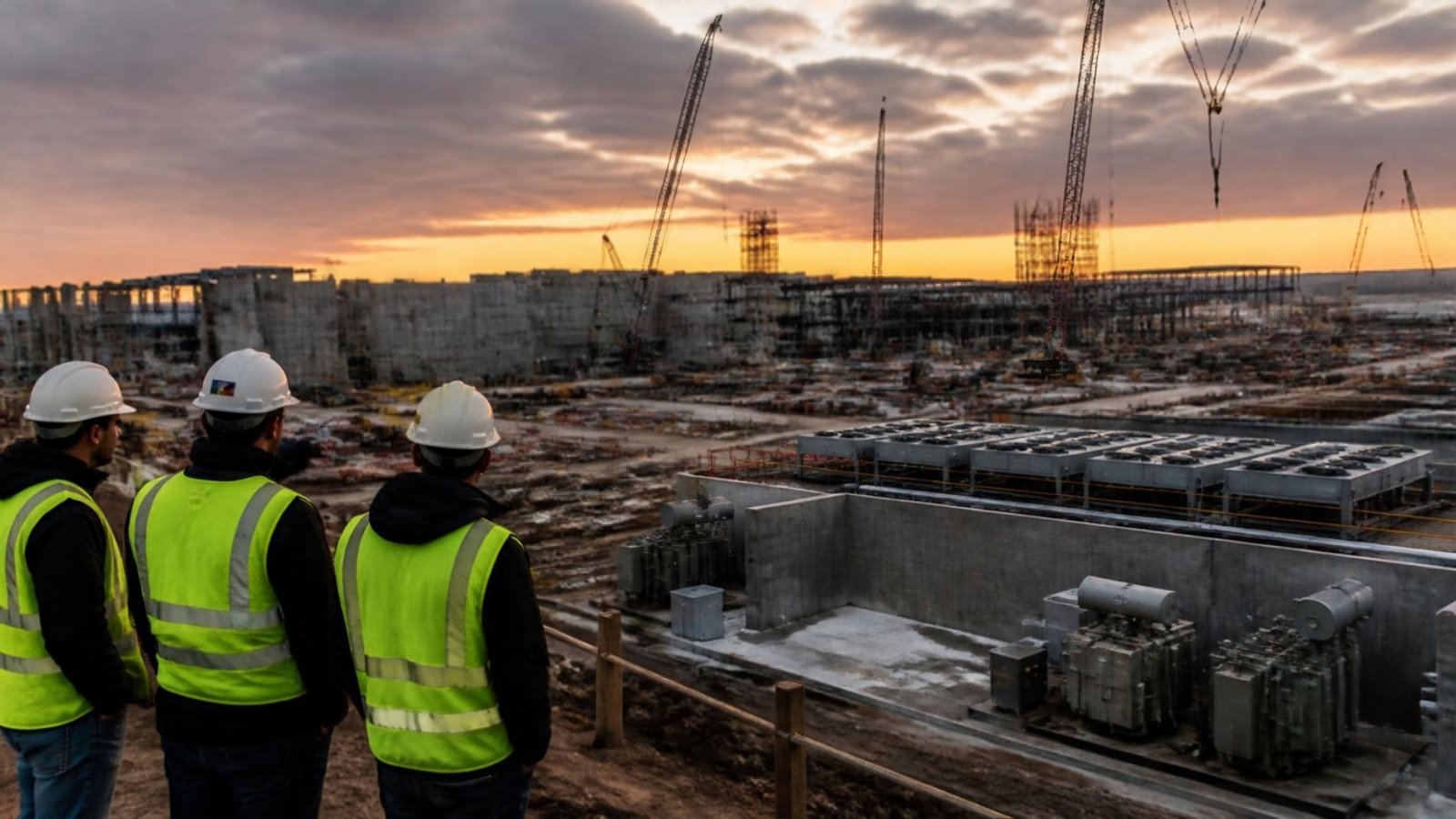
On 8 October 2026, a single number shook the AI industry. OpenAI told investors its annualised revenue at the end of September was about US$50 billion — well below the US$68 billion figure that had been widely reported a few weeks earlier. The gap came down to accounting: rivals count revenue from cloud partners differently. But markets didn't wait for the footnotes. Shares of Nvidia, Oracle and CoreWeave fell the same day.
It was a small accounting story with a big question behind it: is the world spending far more on AI than AI will ever earn back?
In my first post on this blog, I asked whether AI was creating more hype than reality. A year on, the question has grown from individual companies' AI budgets to a trillion-dollar bet by the world's biggest companies. So let's look at both sides: is this a bubble, or the new electricity?
A note on perspective: my company builds AI solutions for enterprises, so I benefit if AI succeeds. I've tried to be balanced anyway — the evidence on both sides is real.
The scale of the bet
The numbers have become almost hard to comprehend.
- Big Tech is spending at record levels. Microsoft, Alphabet, Amazon, Meta and Oracle are on course to spend roughly US$660–780 billion on capital expenditure in 2026 — nearly double 2025 — most of it on AI data centres, chips and power.
- And it's still accelerating. Goldman Sachs expects spending by the largest US cloud companies to rise by about 50% to around US$1.2 trillion next year.
- Globally, the total is even bigger. Morgan Stanley has estimated around US$3 trillion of data-centre spending worldwide between 2025 and 2028 — with roughly half of it expected to be financed through private credit rather than companies' own cash.
To put that in perspective: in a single year, a handful of companies are spending more than the entire GDP of most countries — on one technology.
The revenue gap
Spending on that scale only makes sense if AI eventually earns enough to pay for it.
- The industry needs huge revenues to justify the build-out. J.P. Morgan has estimated that the industry would need around US$650 billion of new annual revenue to earn even a modest 10% return on the infrastructure being built. Sequoia Capital's David Cahn famously called this AI's "$600 billion question".
- Today's AI revenues are growing fast — but from a smaller base. OpenAI's roughly US$50 billion annualised revenue is extraordinary for a company of its age, and Anthropic is growing quickly too. But even together, the leading AI labs earn a fraction of what the infrastructure spend implies.
- Enterprise returns are still patchy. McKinsey's 2026 State of AI survey found that 80% of respondents say AI has improved their own productivity, but only 37% report any positive impact on their organisation's profits — and just 6% qualify as "high performers" seeing significant value. That 6% hasn't moved in a year.
In other words: AI is clearly useful, but the money hasn't caught up with the spending — yet.
The case that it's a bubble
Several warning signs look uncomfortably familiar to anyone who remembers the dot-com era.
1. Circular financing
Some of the biggest deals involve companies effectively funding their own customers. Nvidia has invested in AI labs that then buy Nvidia chips, and in mid-2026 it was reported to be weighing a guarantee of around US$250 billion for an OpenAI data-centre project — news that pushed up the cost of insuring Nvidia's debt. When suppliers finance demand for their own products, it can make that demand look stronger than it really is.
2. Debt hidden off the balance sheet
To avoid loading their own balance sheets, companies increasingly build data centres through special-purpose vehicles funded by private credit, then lease them back. Meta's US$30 billion Hyperion project in Louisiana, co-owned with Blue Owl Capital, is the best-known example. Oracle's filings show around US$288 billion of data-centre lease commitments not yet on its balance sheet — far more than its reported borrowings — and S&P cut its credit rating to BBB-, one notch above junk, in July 2026.
3. Concentration on a few customers
A large share of the industry's future revenue depends on a handful of AI labs, especially OpenAI — which, according to reporting by the Financial Times, projects around US$278 billion of negative free cash flow between 2026 and 2030. If those labs can't keep raising money, the effects ripple through chipmakers, cloud providers, landlords and their lenders.
4. Spending is outrunning cash flow
For some of the largest companies, AI capital spending now exceeds operating cash flow, pushing free cash flow negative. That's a big change from the early years of the boom, when Big Tech funded AI comfortably from profits.
5. Prices are falling fast
The cost of running AI models keeps falling — great for users, harder for those trying to earn a return. Cheaper open-source and Chinese models put further pressure on prices, as analysts at Jefferies have warned.
The case that it's the new electricity
But dismissing it all as a bubble would be a mistake.
1. Demand is real — and still exceeds supply
Cloud providers consistently report that they are limited by capacity, not by demand: they can't build data centres, secure chips and connect power fast enough. That's very different from the empty fibre networks of 2001.
2. People are using AI every day
Hundreds of millions of people now use AI assistants regularly, and businesses are embedding AI into coding, customer service, document processing, fraud detection and much more. Usage of this breadth rarely evaporates.
3. Cheaper AI means more AI
Falling prices are bad for margins but good for adoption. As costs drop, AI becomes viable for millions of new uses — just as cheaper electricity, computing and bandwidth did before.
4. Big productivity gains often come late
When factories first adopted electricity, it took decades for productivity to rise — because companies had to redesign how work was done, not just swap steam engines for motors. Economists call this the productivity J-curve. AI may be following the same path: individual gains first, company-wide gains later.
What history tells us
Big technology booms often look like bubbles and turn out to be transformative.
- Railways in the 1840s: Britain's railway mania ended in a crash and ruined many investors — but left behind a rail network that powered the industrial economy for a century.
- The dot-com and telecom boom of the late 1990s: Billions were lost and many companies vanished. But the fibre laid in that period became the backbone of the modern internet.
There's one important difference this time. Railways and fibre lasted for decades. AI chips become outdated in a few years. If today's investment is followed by a crash, much of the hardware won't be waiting around to be used cheaply later — which makes the economics of this boom less forgiving.
My verdict: both — and the line runs through the middle
I don't think this is a simple bubble, and I don't think it's a sure thing either. The most useful way to see it is in two layers:
- The infrastructure layer — chips, data centres, power and the financing behind them — shows genuine bubble characteristics: circular deals, rising debt, concentration on a few customers and spending running ahead of revenue. A correction here is likely at some point, and some companies and lenders will be hurt.
- The application layer — businesses using AI to serve customers, cut costs and build new products — is creating real value, even if it's spread unevenly and arriving more slowly than the hype promised.
So the likeliest outcome isn't a collapse of AI. It's a painful reset in AI infrastructure valuations, followed by a long period in which the value of AI is captured by the organisations that actually use it well.
What it means for businesses
- Don't bet on one provider. Use multiple models and clouds where you can, so you're not exposed if a provider raises prices, changes terms or struggles financially.
- Negotiate hard. In an oversupplied market — which may come sooner than expected — prices for AI services and compute will fall. Avoid long, rigid commitments at today's prices.
- Measure real returns. Track cost per outcome and business impact, not just usage. The 6% of companies seeing big returns redesign workflows; the rest add tools.
- Prepare for volatility. Expect AI pricing, product roadmaps and vendor stability to change quickly.
What it means for investors
- Look at cash flow, not just revenue growth.
- Watch customer concentration — how much of a company's revenue depends on a few AI labs.
- Check debt and lease commitments, including off-balance-sheet obligations.
- Distinguish between companies selling picks and shovels and companies creating value with AI.
What it means for India and emerging markets
The AI boom creates both opportunity and risk for countries like India.
- The opportunity is in the gap. If AI's biggest problem is turning infrastructure into business value, that's exactly where India's technology services industry and Global Capability Centres can help — by building, integrating and running AI that actually works inside enterprises.
- Build compute carefully. India's AI Mission is expanding shared computing capacity, and data-centre investment is growing. That's important for sovereignty — but public money should avoid overbuilding expensive hardware that may be cheaper in a few years.
- Power is the real constraint. Everywhere, AI's biggest bottleneck is electricity. Countries that can supply clean, reliable power at scale will attract data centres — and those that can't will struggle, as Kenya found when a major data-centre project was put on hold over power capacity.
- Cheaper models are an advantage. Falling AI costs make it easier for Indian businesses, start-ups and public services to adopt AI at scale — including in Indian languages.
Signals to watch
Over the next 12–18 months, these will tell us which way the story is going:
- AI revenue growth versus capital spending at the big cloud providers;
- Funding rounds and valuations for OpenAI, Anthropic and other leading labs;
- Credit markets — bond spreads, credit-default swaps and ratings for AI-exposed companies like Oracle;
- Utilisation and prices for AI computing capacity — falling rental prices would signal oversupply;
- Enterprise renewals — whether companies keep and expand AI contracts after the pilot phase.
Final thought
Every transformative technology has had its bubble. The railways had theirs, and so did the internet. In each case, investors lost fortunes — and the world was changed anyway.
AI is likely to follow the same pattern. The trillion-dollar bet on infrastructure may not pay off for everyone who made it. But the technology itself is real, and the organisations that learn to use it well — patiently, measurably and without betting the company on the hype — will be the ones that capture its value.
The question isn't whether AI is a bubble or the new electricity. It's whether you'll be on the right side of the reset.
Do you think AI is in a bubble? Is your organisation seeing real returns yet? Share your view in the comments.
Sources: Axios and CNBC on OpenAI's reported annualised revenue and the market reaction (8 October 2026); Admiral Markets on the October AI share sell-off; Futurum Group and Bloomberg (Goldman Sachs) on hyperscaler capital expenditure; Morgan Stanley estimates of global data-centre spending, as cited in Wikipedia's "AI bubble" article; The Register (14 October 2026) on infrastructure spending outpacing revenue and Jefferies' warning; J.P. Morgan and Sequoia Capital (David Cahn) on the revenue required to justify AI investment; McKinsey, The State of AI: Global Survey 2026, and summaries by The Impact of AI; PwC CEO Survey and The Register on enterprise AI returns; Axios and Investing.com on Nvidia's reported OpenAI financing guarantee; Quinn Emanuel, Capacity Media and Luminix on AI data-centre financing and private credit; Fortune on Oracle's exposure to OpenAI; reporting by the Financial Times and Reuters on OpenAI's cash-flow projections; Yahoo Finance and Bloomberg on capital spending exceeding cash flow; Andreessen Horowitz's "LLMflation" analysis; historical accounts of Britain's railway mania and the dot-com and telecom bubble.