Trump's 'Tremendous Tax' on Overseas Data Centres: What It Means for India's AI Ambitions
Trump says US companies building AI data centres abroad will face a 'tremendous tax'. With Google, Microsoft and Amazon committing about $67.5 billion to India, here's what he said, whether he can do it, and what India and businesses should do.
By Pavan Kumar Verma · · 8 min read
On 20 November 2026, speaking at the White House, US President Donald Trump made a statement that should have every Indian policymaker, cloud customer and data-centre investor paying attention.
"We're not allowing data centres to go into other countries," he said, according to ABC News. American companies that build AI data centres abroad, he warned, would face a "tremendous tax".
He gave no rate, no start date and no legal basis — and, by several accounts, admitted he hadn't yet discussed the idea with his own officials. It may turn out to be rhetoric. But it lands just as Google, Microsoft and Amazon are pouring tens of billions of dollars into data centres in India, and as India positions itself as a global AI and cloud hub.
So what did he actually say, can he really do it, and what should India and Indian businesses do?
A note on perspective: I run an IT services company that builds on these cloud platforms for clients in India, Africa and the Middle East, so I have a direct interest in where the world's data centres get built.
What Trump said — and what we don't know
According to reports by ABC News, Axios and others, Trump:
- Said the US is "not allowing" data centres to go to other countries, and that American companies building them abroad would pay a "tremendous tax";
- Framed it as part of the AI race with China, saying the US is going to "fight very hard for the data centres";
- Urged companies to invest at home and create American jobs;
- Encouraged US communities worried about data centres to "make them pay" — negotiate benefits — rather than block them.
What he didn't say matters just as much:
- No tax rate, start date or definition of which companies or projects would be covered;
- No legal mechanism — whether this would be a new law, a tariff, a penalty or something else;
- No consultation — he reportedly said he hadn't yet told his officials about the plan.
Why now? The politics of data centres
The timing isn't random. Across the US, data centres have become a political flashpoint. Residents have pushed back against facilities that consume huge amounts of electricity and water and, critics say, push up local power bills. ABC reports that opposition to data centres became a central issue in this month's midterm elections, in which Republicans lost control of Congress.
Trump's message tries to have it both ways: keep the AI boom — and its jobs and investment — inside the US, while telling local communities to extract a better deal from the companies building them.
What's at stake for India
India has been one of the biggest winners of the global data-centre boom. Since October 2025, the three largest US cloud companies have announced roughly US$67.5 billion of investment in India:
| Company | Announced India investment |
|---|---|
| US$15 billion over five years (2026–2030) for an AI hub in Visakhapatnam, including a gigawatt-scale data-centre campus and a subsea cable gateway — Google's largest AI infrastructure investment outside the US | |
| Microsoft | US$17.5 billion over four years from 2026, including a hyperscale region in Hyderabad and expansion in Chennai and Pune, plus skills and operations |
| Amazon | US$35 billion across its India businesses by 2030, including major cloud and AI infrastructure investment by AWS |
Figures as announced by the companies and reported by the Economic Times, ChinaTechNews and others. Amazon's figure covers more than data centres.
India has also rolled out the red carpet. In the Union Budget 2026-27, the government announced a tax holiday until 2047 for eligible foreign companies that serve global customers through Indian data centres — provided they buy data-centre services from an Indian operator and serve Indian customers through an Indian reseller. The aim is to remove the long-standing fear that putting servers in India would expose a foreign company's global income to Indian tax.
States are competing hard too. Andhra Pradesh, Telangana, Tamil Nadu, Maharashtra and Uttar Pradesh all court data-centre investment, and newer entrants like Bihar, which approved an AI policy this month, are joining in.
All of this assumes US companies remain free to build abroad. Trump's remarks put a question mark over that assumption.
Can he actually do it?
Probably not easily — at least not in the sweeping way he described.
- Taxes need Congress. Under the US Constitution, Congress holds the power to tax. A new tax on overseas investment would need legislation — from a Congress that, from January, his party will no longer control.
- Tariffs are an awkward fit. Tariffs apply to goods crossing borders. A data centre built and operated in India isn't an import into the US, so existing tariff powers don't map neatly onto it.
- There are other levers. The administration could use export controls on advanced AI chips, conditions on federal contracts, or tax rules on how companies account for foreign profits. These are narrower, but they're real.
- Companies have strong reasons to build abroad. Cloud services need to be close to users for speed. Many countries — India included — require certain data to be stored locally, especially in banking, payments and government. And customers increasingly want "sovereign" cloud and AI under their own laws. US companies that can't serve those markets locally would simply lose them to competitors.
Three scenarios
1. Rhetoric fades (most likely in the near term). No concrete measure emerges, and projects continue — but companies become more cautious about announcing big new overseas investments, and more vocal about their US spending.
2. Targeted pressure (quite possible). The US uses narrower tools: tighter conditions on exporting top-end AI chips to overseas data centres, incentives for domestic builds, or reporting requirements. India's projects continue, but the most advanced AI computing may be slower or harder to get.
3. A broad tax or ban (less likely, but high impact). If a real tax passes, US companies could delay or shrink new overseas projects. Existing commitments would probably continue, but the next wave of investment could slow.
What it means for India
The risks
- Delays to future projects, particularly ones not yet committed or under construction;
- Less access to cutting-edge AI chips if export controls tighten;
- Uncertainty for the states building land, power and incentive packages around hyperscale investment;
- A blow to India's "global AI hub" pitch, which depends on serving international customers from Indian soil.
The opportunities
- Indian data-centre operators — such as Adani, Reliance, CtrlS, Yotta and others — could gain market share if US companies hesitate, and India's tax-holiday design already encourages foreign cloud firms to buy capacity from Indian operators rather than build everything themselves.
- Sovereign AI and cloud: the case for Indian-owned compute capacity, including under the IndiaAI Mission, gets stronger.
- Diversification: European, Japanese, Gulf and Indian investors may see an opening to fill any gap.
What India should do
- Keep the welcome mat out — but diversify. Continue to attract US investment while actively courting investors from Europe, Japan, the Gulf and India itself.
- Build sovereign capacity. Accelerate public and private Indian-owned AI compute, so critical services don't depend on decisions made in Washington.
- Fix power and water first. The same local backlash that's hurting data centres in the US could emerge in India. Long-term clean power deals, water recycling and clear community benefits should be built into approvals.
- Engage Washington. Make the case — through trade talks and industry bodies — that US companies' Indian data centres support American firms' global competitiveness rather than undermine it.
- Keep rules stable. India's best asset is predictability. Clear, long-term tax and data rules — like the 2047 tax holiday — are what investors value most in uncertain times.
What businesses should do
- Don't panic, but plan. Existing Indian cloud regions aren't going anywhere. But if you're relying on new capacity — especially for AI workloads — build in contingencies.
- Avoid single-provider dependence. Use architectures that can run across more than one cloud, including Indian providers where appropriate.
- Check your data-residency obligations. Make sure regulated data stays in India regardless of what happens to future investment plans (more on India's DPDP rules here).
- Watch AI compute costs and availability. Export controls or slower build-outs could make high-end AI computing scarcer and more expensive in India.
Beyond India: Africa and the Middle East
The same question applies far beyond India. Gulf states have bet heavily on hosting AI infrastructure, and African countries from Kenya to Nigeria and South Africa are competing for hyperscale investment — often with US companies as anchor tenants. As I wrote about Kenya's tech ambitions, power capacity is already a major constraint. A US push to keep data centres at home would make it harder still for emerging markets to attract the infrastructure that their digital economies need.
Final thought
Trump's "tremendous tax" may never become law. But it's a reminder of a bigger shift: data centres are no longer just real estate. They're geopolitics. Governments now see compute capacity the way they once saw oil refineries or steel plants — as strategic assets to be kept at home.
For India, the right response isn't alarm. It's resilience: keep attracting global investment, build more of its own, fix the power and water constraints, and keep its rules predictable. The countries that do that will host the world's AI infrastructure — whoever is in the White House.
Do you think US companies will slow their investments in India? Share your view in the comments.
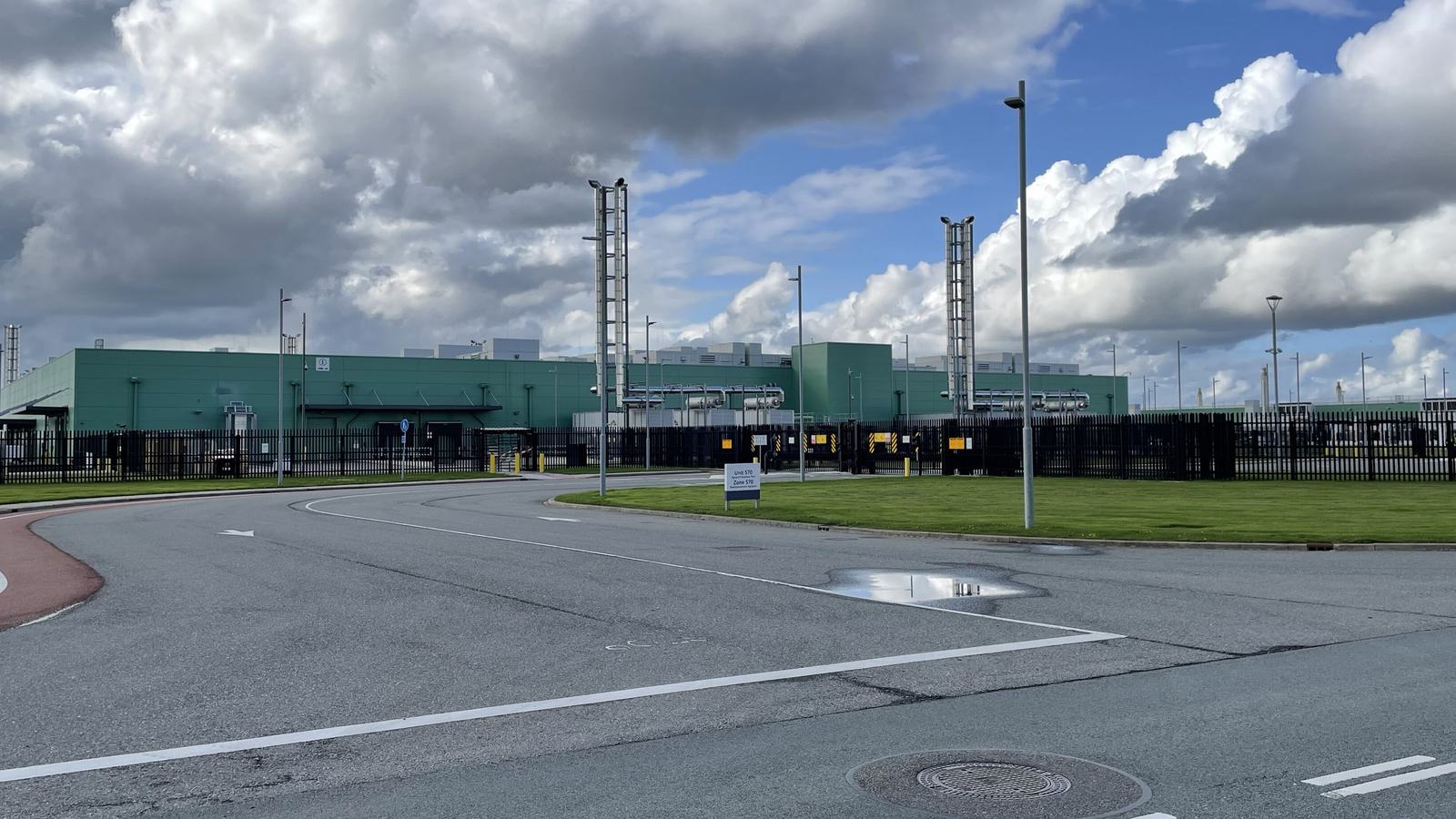
Cover photo: Microsoft's data centre in Middenmeer, the Netherlands — one of many US-owned data centres outside America. Photo by Hay Kranen, CC BY 4.0, via Wikimedia Commons.
Sources: ABC News (Australia), "Donald Trump vows to tax US companies building data centres overseas" (21 November 2026); Axios, "Trump says he would block US companies from building data centers overseas or impose a 'tremendous tax' on them" (20 November 2026); RTV English and BW Businessworld on Trump's remarks (November 2026); ChinaTechNews and the Economic Times on the implications for India's AI ambitions and US cloud investments (21 November 2026); Elets CIO and Inshorts on the risk to Google's Visakhapatnam project; Google, Microsoft and Amazon investment announcements (October–December 2025); Press Information Bureau, Bloomberg Tax, Onmanorama and Legal500 on the Union Budget 2026-27 tax holiday for foreign cloud companies; MediaNama and Analytics India Magazine on state AI policies in Bihar and Goa (November 2026).