Jensen Huang Is Back at Nvidia: What the 11-Day CEO Crisis Teaches About Governance, Key-Person Risk and Geopolitics
Eleven days after Jensen Huang resigned, Nvidia's board unanimously reinstated him and the stock jumped about 30%. What happened, why the board reversed itself, and the lessons for boards, investors and India's AI plans.
By Pavan Kumar Verma · · 7 min read
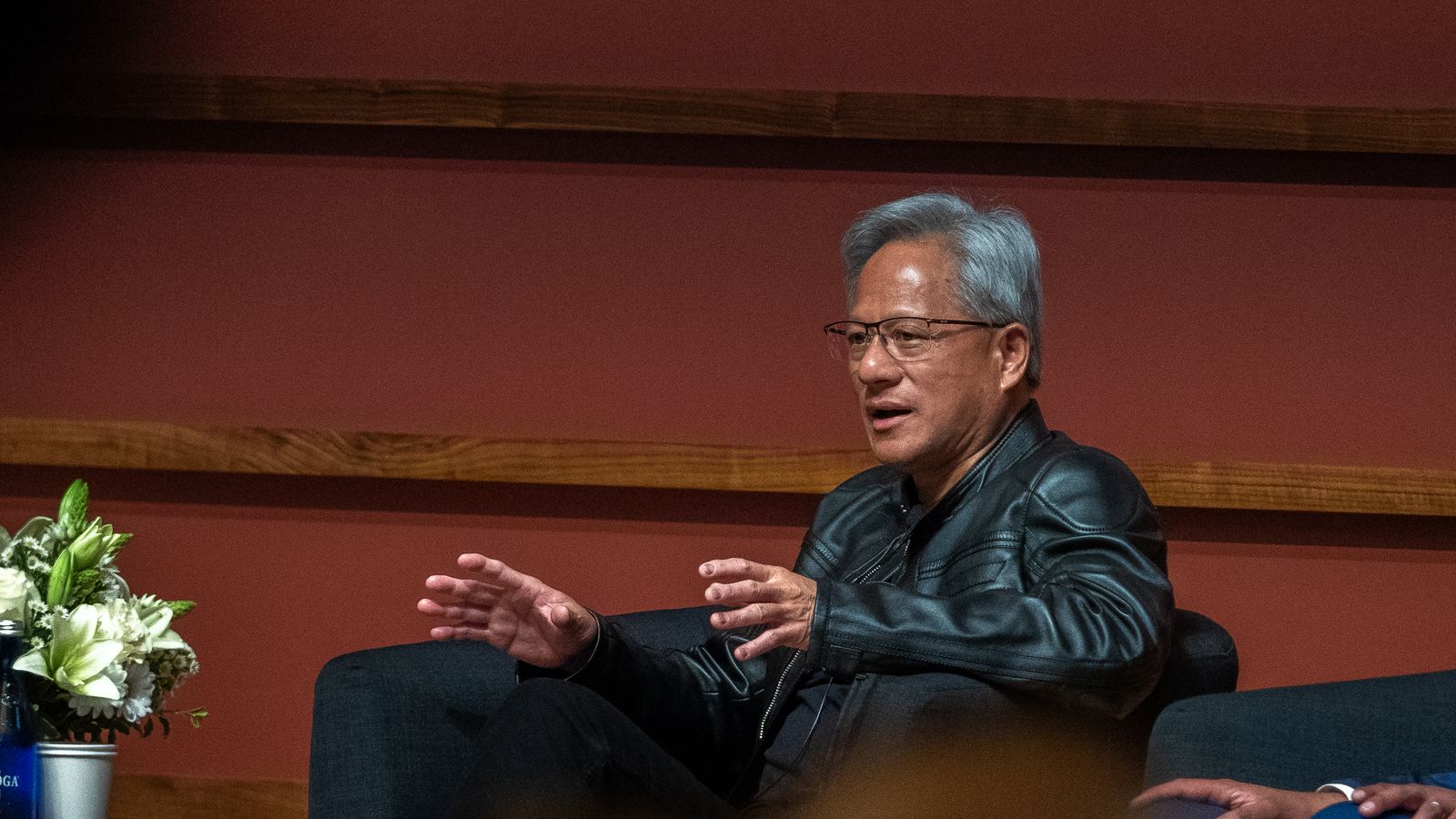
On 23 November 2026, Nvidia's board did something almost unheard of in corporate history. Eleven days after announcing that founder Jensen Huang had resigned as CEO, it voted unanimously to bring him back as president, chief executive and board member, "effective immediately".
Nvidia's shares jumped by around 30% in early trading — adding hundreds of billions of dollars in value in a matter of hours — and the Nasdaq rose more than 6%.
The drama is gripping on its own. But underneath it are serious lessons about key-person risk, corporate governance, and how deeply geopolitics now shapes the technology industry. Here's what happened, and why it matters well beyond Nvidia.
What happened: an 11-day CEO crisis
| Date (2026) | Event |
|---|---|
| Late Oct – early Nov | Reports in the New York Times, Financial Times and others say US officials believe a businesswoman Huang had a personal relationship with — an executive at a Singapore data-centre company that bought large volumes of Nvidia chips — was linked to Chinese intelligence. These allegations remain unproven; China called them "groundless", and US authorities said they had reached no conclusion |
| 8 Nov | Huang reportedly apologises to employees for personal failings. The board launches an investigation and says it has no reason to believe Nvidia's secrets or national security were compromised |
| 11–12 Nov | Huang resigns as president and CEO. CFO Colette Kress becomes interim CEO; Harvey C. Jones, a director since 1993, becomes Nvidia's first-ever independent board chair. The board begins searching for a permanent CEO |
| 17 Nov | Nvidia reports strong quarterly results. The Wall Street Journal reports the SEC has opened a civil inquiry into Nvidia's disclosures; Reuters later reports it is examining potential accounting issues. Neither the SEC nor Nvidia has confirmed it, and such inquiries often end without charges. The board says it does not intend to reinstate Huang |
| 17–20 Nov | Nvidia's shares slide, falling nearly 14% on 20 November alone. A petition for Huang's return gathers around 180,000 signatures |
| 23 Nov | The board reinstates Huang, citing input "from senior levels of the United States government" and saying it is confident his return "poses no national security risk". An independent investigation continues |
President Trump welcomed the decision, calling it "correct and proper", and said he had been "represented" in the board's deliberations. Lawmakers from both parties have pushed back, and Huang has been asked to testify before the US Senate Banking Committee, with a hearing expected in early December.
Why the board reversed itself
Officially, the board pointed to Huang's "candor and ability to lead" and to reassurance from the US government. In practice, three forces were hard to ignore:
- The market's verdict. Nvidia lost a huge amount of value while Huang was out. Some analysts had warned the company could lose as much as 30% of its value without him. The jump on his return shows how much of Nvidia's valuation investors attach to one person.
- Political pressure. The White House's public backing — and its role in assessing the national security question — changed the board's risk calculation.
- No obvious successor. Huang co-founded Nvidia in 1993 and has led it for over three decades. Replacing the architect of the world's most important AI company in the middle of an AI boom was always going to be extraordinarily hard.
The lessons
1. Key-person risk is real — and investors just priced it
Nvidia is one of the most valuable companies in the world, with deep engineering talent. Yet its share price swung wildly on the fate of one person. When a company's strategy, customer relationships and culture are built around a founder, losing that founder is a business risk, not just a personnel change.
For boards everywhere — including India's founder-led tech companies and family businesses — the lesson is to treat succession planning as a core risk-management task, not an awkward conversation to postpone.
2. Governance shouldn't swing with the share price
Within one week, Nvidia's board said it would not reinstate Huang, and then reinstated him. Investors cheered, but governance experts will ask hard questions: were the board's decisions driven by its investigation, by market pressure, or by politics?
Nvidia has taken some sensible steps: an independent chair, an investigation committee made up solely of independent directors, a new national security and export-control committee, and a search for a chief compliance officer. The credibility of the reinstatement now depends on that investigation being genuinely independent and completed transparently — whatever it finds.
3. Tech leaders are now geopolitical actors
This crisis wasn't really about one executive's private life. It became a national story because of China, AI chips and export controls. Nvidia sits at the centre of the US–China technology rivalry: its chips are the backbone of AI, and US rules restrict which chips can be sold to China. Reports that large volumes of Nvidia chips flowed to buyers linked to China had already put the company under scrutiny.
When a company is that strategically important, the government becomes a stakeholder in who runs it. That's a new reality for technology companies — and their boards.
4. Supply-chain and customer due diligence matter more than ever
Whatever the investigation concludes, the episode shows how export-control compliance — knowing exactly who your customers are and where your products end up — has become a board-level issue. Every company selling advanced technology across borders should review its "know your customer" processes for intermediaries, resellers and cloud providers.
What it means for India
India has a big stake in Nvidia's stability:
- AI infrastructure depends on Nvidia. India's AI Mission, data-centre operators like Yotta and Reliance, and the US cloud companies building in India all rely heavily on Nvidia's chips. Leadership turmoil, tighter export controls or supply disruptions would ripple straight into India's AI plans (more on India's data-centre ambitions here).
- Export controls may tighten. The scrutiny of how chips reach China could lead to stricter rules on chip exports and remote access to computing worldwide. India must ensure it remains a trusted destination — with strong compliance and clear end-use checks — so that controls aimed at China don't slow down Indian AI.
- Diversify where possible. Relying on a single supplier for critical AI infrastructure is a strategic risk. India should support alternatives — AMD, custom chips from cloud providers, and its own semiconductor programme — alongside Nvidia.
- A governance lesson for Indian companies. Many of India's most valuable companies are founder-led. Independent boards, clear succession plans and strong compliance are what reassure investors when a crisis hits.
What to watch next
- The independent investigation and whether its findings are made public;
- The Senate Banking Committee hearing, expected in early December;
- The reported SEC inquiry — whether it is confirmed and what it covers;
- Export-control changes, particularly rules on chips and remote access to computing;
- Succession planning — whether Nvidia names a clear successor or a stronger leadership bench.
Final thought
Jensen Huang's return shows how much the world's most important AI company still depends on its founder — and how much markets and governments care about who leads it. Investors got the outcome they wanted. But the questions that sparked the crisis haven't gone away: who buys AI chips, where they end up, and how much trust we place in the people who control the world's most strategic technology.
For every board, the lesson is the same: plan for the day your most important leader isn't there — before the crisis forces the decision.
Was Nvidia's board right to bring Jensen Huang back? Share your view in the comments.
Cover photo: Jensen Huang speaking at Stanford University, April 2026. Photo by Anders Eidesvik, CC BY 4.0, via Wikimedia Commons.
Sources: Nvidia, "NVIDIA Board Reinstates Jensen Huang as President, CEO and Board Director" (23 November 2026); Nvidia, Form 8-K and press release on the CEO transition (12 November 2026); Al Jazeera, "Nvidia board reinstates Jensen Huang as CEO" (23 November 2026); NPR, CNN, Deadline and MPR News on the reinstatement (23 November 2026); TechCrunch via Yahoo Finance, citing the Wall Street Journal, on the reported SEC inquiry (18 November 2026); Reuters, Wccftech and New Straits Times on the reported SEC accounting review (November 2026); reporting by the New York Times, Financial Times, Bloomberg and The Information on the background to Huang's resignation, as summarised on Wikipedia's "Jensen Huang scandal" page (November 2026).